Showing posts with label Blogging. Show all posts

Thursday, March 20, 2008

How to backup your medical blog?

Writing a medical blog takes time and effort. A blog is also a personal archive which should be protected against deletion by an accident or a malicious hacker. The first step is to choose a good password. The second it to backup your blog regularly, probably weekly or monthly.

There are 2 relatively easy options to backup your blog:

1. HTTrack Website Copier

This free program allows you to save entire web sites (including your blog) on your hard drive so that you can browse them offline. I use HTTrack to backup several of my websites and have not had any problems with it. It downloads all the text, links, images, audio and video files to the hard drive in a directory called "MySites." An incremental backup is done after the first run of the program.

2. Blogger Backup at CodePlex.com

Blogger Backup goes one step further than HTTrack by allowing you to restore your posts back online in case you accidentally delete your blog or some of the posts. I have not tried the program yet but the credible Digitial Inspiration blog has a positive review of Blogger Backup.

References:
Download All Your Blogs with Blogger Backup, Easy Restoration. Digital Inspiration.
Image source: Wikipedia

Related:
New: Export Your Blogger Blogs or Merge Multiple Blogs into One. Digital Inspiration, 06/2008.
How do I import and export blogs on Blogger? Blogger.com.
Bulletproof Backup Strategies. EfficientMD, 08/2008.
Import and Export for Blogger blogs. Blogger Buzz, 12/2008.

Updated: 12/11/2008

Thursday, March 13, 2008

NPR: Doctor Blogs Raise Concerns About Patient Privacy

A NPR story discusses if Doctor Blogs Raise Concerns About Patient Privacy (4 min 49 sec).

Dr. Debra Peel, a psychiatrist and founder of the group Patient Privacy Rights, is unhappy with doctors "venting" their frustration on personal blogs:

"If you are unhappy with the people that you're supposed to be serving and taking care of, you probably need therapy," she says. "You don't need to be venting your frustrations in a public manner like that. That's very inappropriate and unprofessional."

These are strong words. A few members of the profession have made a "blogging career" out of sharing their frustration with the current status of our health system. This is not limited to the U.S., NHS Blog Doctor, for example, is very critical of the government-sponsored health system in the U.K.

One should take into account not only protecting confidentiality and professional behavior but also freedom of speech.

There are some simple rules to observe when blogging, in addition to using common sense. The top and foremost is not to publish any of the 18 HIPAA identifiers when writing about patients. Some doctor bloggers take this rule to an extreme and do not to write about patients at all.

Tips for medical bloggers

- Write as if your boss and your patients are reading your blog every day
- Comply with HIPAA
- Do not blog anonymously. List your name and contact information.
- If your blog is work-related, it is probably better to let your employer know.
- Inquire if there are any blogging guidelines. If there are, comply with them strictly.
- Use a disclaimer, e.g. " All opinions expressed here are those of their authors and not of their employer. Information provided here is for medical education only. It is not intended as and does not substitute for medical advice."
- Get your blog accredited by the Heath on the Net Foundation

Dr. Wes offers more detailed advice on Keeping Pace With a Blog in EP Lab Digest. Note: GruntDoc disagrees with the advice not to blog anonymously (see his comment here).

References:
Doctor Blogs Raise Concerns About Patient Privacy. NPR.
Simply Fired - How NOT to Blog About Your Job. Especially If You Are a Doctor. Clinical Cases and Images - Blog, 08/2005.
How to write a medical blog and not get fired?
Anonymous Medical Blogger? Not Anymore. Clinical Cases and Images - Blog, 02/2007.
Can You Trust Blogs? 10 Questions for Medical Bloggers
Case Reports and HIPAA Rules
Image source: Wikipedia

Sunday, March 9, 2008

Another Milestone: Two Million Page Views for Clinical Cases and Images

ClinicalCases.org and Casesblog have reached the milestone of two million page views since their launch in 2005 (see the SiteMeter screenshot on the right). We stand at 2,015,005 page views and 707,771 visits as of today. Clinical Cases and Images (ClinicalCases.org) has become probably the most popular case-based curriculum of clinical medicine on the web and is ranked number one among 11 million pages.

The project was developed at Cleveland Clinic is hyperlinked in the web sites of 27 medical schools in the U.S., Canada, Europe, South America and Asia. ClinicalCases.org has been featured in 10 peer-reviewed medical journals and other scientific publications including British Medical Journal (3 times), Journal of the American College of Cardiology, Cleveland Clinic Journal of Medicine, Journal of the American Society of Nephrology, BMC Medical Education, Journal of the American Podiatric Medical Association, Nursing Education Perspectives, Baylor College of Medicine Web Digest, Medscape (2 times), Student BMJ, Medical Journal of Australia and Clinical Infectious Diseases. Abstracts and posters about the use of Clinical Cases and Images for medical education in different subspecialties have been presented at multiple scientific meetings including the annual sessions of American College of Cardiology, American Society of Nephrology, International Association of Medical Science Educators, Society of Hospital Medicine, Cleveland Clinic Annual Perioperative Medicine Summit, and Case Western Reserve University Research ShowCase.

Just as a short explanation, ClinicalCases.org is a collaborative attempt to build an online case-based curriculum of medicine. CasesBlog is the blog I started in March 2005 (3 years ago) to collect ideas, interesting stories and post relevant news about the Clinical Cases and Images project.

In my work as a Clinical Assistant Professor at the Cleveland Clinic and Case Western Reserve University medical schools, I was pleasantly surprised to find that a blog can be very useful for both personal education (building a portfolio) and education of others. A wiki seems to be the next logical step for collaborative education and I have recently been exploring this concept with several of my friends and colleagues.

My colleagues who write for ClinicalCases.org and I would like to express our deep appreciation to our readers. We hope you continue to find our sites interesting, educational and worth-visiting in the future.

See how you can use Web 2.0 services for medical education in the presentation below:


References:
Another Milestone: One and a Half Million Page Views for Clinical Cases and Images. CasesBlog, 06/ 2007.
One Million Page Views. CasesBlog, 2006.
Medical Schools Which Link to Our Project Clinical Cases and Images

Friday, March 7, 2008

Blogger Advice: Communicate with Your Readers Via Free Phone Calls and Chat

Google released 2 new features which allow any blogger with access to the HTML template of their site to embed 2 badges = communication channels for direct contact with readers:

- Free phone calls via Grand Central VOIP service (WebCall Button). The button also allows you to post voice mail to your blog which replaces the now defunct AudioBlogger feature.

- Chat via Google chat (Chatback badge)


This Google video shows it takes about 2 minutes to start a blog on Blogger.com. Creating a web site has never been easier.

References:
Google Talk chatback. Google Talk Blog.
Chatback: Let people comment using Google Talk. Garett Rogers.
Add Google Talk Badge To Your Blog and Chat with Readers Live. Digital Inspiration.
GrandCentral: receive calls and post voicemail with your blog. Blogger Buzz.

Friday, February 8, 2008

How to write a medical blog and not get fired

I have covered the topic before but there is a new example of a sensible approach to medical blogging.

Kevin, MD linked to the blog Boston EMT which was the subject of an article in Boston Globe. Kevin wondered if the Boston EMT's employer was aware of the blog and the question was answered in the comments by the blog author himself:

"Yes, my employer, Boston EMS, has seen the blog. The Chief of Department has seen it, and, in fact, he has given reporters permission to interview me and write about the blog. In fact, two high-ranking members of the department have participated in it, by telling stories of their own in the form of comments left on the site.

Consent to write the blog was given on two conditions: (1) That I make clear that my views do not necessarily reflect those of the city or of Boston EMS, and (2) that I adhere to the privacy requirements of HIPAA.

I've been careful to do both."

This is one of the "right ways" to do medical blogging.

Tips for Medical Bloggers

- Write as if your boss and your patients are reading your blog every day
- Comply with HIPAA
- Anonymous blogging  may not last long. Consider using your name and credentials on your blog and other social media accounts
- If your blog is work-related, it is probably better to let your employer know.
- Inquire if there are any blogging guidelines. If there are, comply with them strictly.
- Use a disclaimer, e.g. " All opinions expressed here are those of their authors and not of their employer. Information provided here is for medical education only. It is not intended as and does not substitute for medical advice."
- Get your blog accredited by the Heath on the Net Foundation


This Google video shows that it takes about 2 minutes to start a blog on Blogger.com. Creating a web site has never been easier.

References:
Simply Fired - How NOT to Blog About Your Job. Especially If You Are a Doctor. Clinical Cases and Images - Blog, 08/2005.
Dr Flea Blogged His Malpractice Trial, Settles When Outed. Clinical Cases and Images - Blog, 05/2007.
Anonymous Medical Blogger? Not Anymore. Clinical Cases and Images - Blog, 02/2007.

Related:
How to blog - and keep your job. BBC, 2006.
Twitter, HIPAA, Privacy and Freedom of Speech. Phil Baumann, 07/2008.
When Blogging Gets You Fired. David Bradley, 2009.
On blogging. DB’s Medical Rants, 2009.
As A Busy Physician, Why Do I Even Bother Blogging? http://goo.gl/fSF3 - Excellent summary.

Monday, January 28, 2008

Topolog: Videoblog by Prominent Cardiologist Eric Topol

Eric Topol is the former chief of cardiology at Cleveland Clinic and current Chief Academic Officer of Scripps Clinic. He publishes an interesting video blog on Heart.org called Topolog which includes:

- Topol's Selections -- a series of articles Eric Topol finds interesting

- Video posts. There have been only 6 posts since November 2007 (as of 01/28/2008) with the most recent one on ENHANCE trial with ezetimibe.

The embedding of the videos is disabled.

This is the RSS feed:

http://blogs.theheart.org/posts/rss.xml

Thursday, January 24, 2008

Why Use Web 2.0: An Open Letter to Physicians

Bertalan Meskó explains how academic and private practice physicians can benefit from using Web 2.0 in Open Letter to the Physicians of the World.

He covers what I call the the 6 axes of medical education in Web 2.0 style:
  1. Web feeds (RSS)
  2. Podcasts
  3. Blogs
  4. Wikis
  5. Custom search engines
  6. Second Life virtual world
Bertalan's letter is worth-reading and the University of Debrecen is lucky to have him as a student.

My presentation on Web 2.0 in Medicine from December 2006 is below:


References:
Open Letter to the Physicians of the World. ScienceRoll.com.
Image source: ScienceRoll.com, a Creative Commons license.

Saturday, January 19, 2008

Why Do I Blog?

A few answers are below:

I'm a Finalist by Dr. Wes.

Why I blog by Kevin, M.D.

Why do I blog?

This blog is a type of educational portfolio. I also use it during my teaching months to make a list of the topics discussed during the rotation with the residents and get feedback. And last but not least, this is the "blog of ClinicalCases.org with medical, tech and other interesting stories."

Currently, there are more than 2,000 subscribers via RSS and more than 1,000 daily website visitors but even if nobody reads it, I will still keep the blog up. Why? Because I have found that writing a blog can be useful, educational, entertaining and time-efficient. It creates your own section of the web that you own and trust. It also creates a relationship with some of the smartest people around the world that you would probably have never had the chance to meet otherwise. If you do not have a blog yet, may be you should consider starting one. The 2 easiest and free options are Blogger.com by Google and WordPress.com.

There are many downsides of having a blog, of course. But just like with any useful treatment, the benefits outweigh the risks for most people. I am not sure what is the "number needed to treat (NNT)," though...


This Google video shows that it takes 2 minutes to start a blog on Blogger.com. Creating a web site has never been easier.

From Twitter:

Ves Dimov, M.D.
AllergyNotes "Blogging keeps your mind sharp, improves your writing, brings you closer to intellectual people" http://tinyurl.com/9tuban

Ves Dimov, M.D.
AllergyNotes Blogging: A book that you write slowly over time http://tinyurl.com/9tuban

Ves Dimov, M.D.
AllergyNotes Blogging Is Like Going To The Gym… For Your Brain http://tinyurl.com/9tuban


Related reading:

"One of the best decisions I’ve made in my career was to start a blog and a wiki, leaving a paper trail of ideas" http://bit.ly/GX7Z6C
How To Use Your Blog To Make 2008 Your Best Year Ever! LifeHack.org.
Using a Blog to Build an Educational Portfolio. Clinical Cases and Images - Blog.
Topics Discussed During the Internal Medicine Rotation at Cleveland Clinic in October/November 2007. Clinical Cases and Images - Blog.
Blogging Is Like Going To The Gym... For Your Brain. Adam Singer, The Future Buzz, 01/2009.
Why Blog? Smartzville, 2009.
Why I blog? Life in the fast lane, 2010.
As A Busy Physician, Why Do I Even Bother Blogging? http://goo.gl/fSF3 - Excellent summary.
Why blog? Notes from Dr. RW. A perfectly reasonable list. All doctors should consider blogging. It's do-it-yourself CME.
Beautiful example of how blogs can disseminate medical information much more efficiently than journals, NEJM included (http://goo.gl/rOvNq).

Wednesday, January 9, 2008

2007 Medical Weblog Awards: Polls Are Open

Polls are open for the 4rd annual Medical Weblog Awards hosted by Medgadget (started in 2003). There are many excellent blogs listed as finalists. In fact, many more than you can reasonably expect to read if you still practice medicine full time.

Clinical Cases and Images - Blog is a finalist in 2 categories. Feel free to vote for this blog if you enjoy reading it:

Vote for Best Clinical Sciences Weblog

Vote for Best Medical Technologies/Informatics Weblog

In the category of Best Clinical Sciences Weblog, there is a similar late surge every year. This blog usually leads by a small margin until a day or two before the poll closes. Then, the tele-radiologist Sumer mobilizes a large number of supporters and wins by a margin of 100-200 votes. In any case, CasesBlog is honored to be a finalist in this venerable competition and everybody involved is planning to enjoy the process just as we do every year.

GruntDoc had a revolutionary idea in 2005: "I say we forget the online voting, all meet at a neutral site, and thumb-wrestle for the winner."

Update 01/23/2007:

Medgadget announces the winners of 2007 Medical Weblog Awards.

Related:
Dr. A Show 21: Wrap-up. Doctor Anonymous, 01/2008.
2006 Medical Weblog Awards: Polls Are Open
The Best Medical Blogs of 2005 on Medgadget.com


Updated: 01/23/2008

Tuesday, January 8, 2008

Unhappy People

Web 2.0

David Rothman is unhappy with the term "Web 2.0," which according to him, has no features and cannot be used. On the other hand, Dean Giustini has moved beyond Web 2.0 and is "featuring" Web 3.0 in his latest BMJ editorial. David seems to suggest the alternative term "Web Geekery" which does not sound much better than "Web 2.0." The conversation continues in The Beauty of the Dialectial Process.

Disclaimer: Actually, I believe I was the first to write about “Web 2.0 in Medicine” (in October 2005) but in hindsight, may be I should have stayed out of this altogether :)

Pain management

CNN journalist Glenn Beck is unhappy with his post-operative pain management and has written a hospital horror story.

As usual, with blog posts concerning emotion, comments are almost as interesting as the posts. Glenn Beck's blog does not have comments open but Kevin, MD more than compensates for it.

And you wonder why bloggers have heart attacks...

Related:
Disliking “Web 2.0″ and Hating “Web 3.0″ DavidRothman.net.
The Beauty of the Dialectial Process. DavidRothman.net.
Hospitals Gone Bad. Glenn Beck, 01/2008.
Glenn Beck: Put the 'care' back in health care. CNN.
Bloggers and Heart Attacks
Web 3.0 Shakes It Up - 'It's a Question of Semantics.' UBC Academic Search - Google Scholar Blog.
Cho A, Giustini D. Web 3.0 and health librarians: an introduction. Journal of the Canadian Health Libraries Association. 29:13-18, 2008.
(PDF)

Updated: 03/21/2008

Monday, January 7, 2008

Bloggers and Heart Attacks

Can the stress of blogging cause a heart attack? It is doubtful but one finds it difficult to ignore the fact that not one but two well-known and well-liked tech bloggers had a heart attack in recent weeks.

Marck Orchant (50) never regained consciousness after his massive MI on December 2. The 41-year-old Om Malik of GigaOM was far more lucky and is expected to make a full recovery after his heart attack on December 28, 2007 according to his own announcement in a blog post (where else?). According to NYTimes, " the chief operating officer for Mr. Malik’s company, Giga Omni Media, played down stress as a factor in Mr. Malik’s health. He noted Mr. Malik’s incessant smoking of cigars and cigarettes was a more likely cause."

Om has decided to change his lifestyle significantly and it looks like we will enjoy many more episodes of the show in the future:

"Now living a healthier life isn’t just one of my New Year’s resolutions, it’s doctor’s orders. Friends and family have purged my apartment of smokes, scotch and all my favorite fatty foods — I am even going to be drinking decaf. I won’t be refashioning my avatar’s stogie with a celery stick, but I will be taking better care of my health."

Om Malik is currently doing well: "Making such drastic changes wasn’t easy, but they offered me the best chance of staying alive — and 50 pounds and 12 months later, have clearly worked."

Related reading

Some Brand-Name Bloggers Say Stress of Posting Is a Hazard to Their Health. NYTimes.
Popular tech blogger Mark Orchant died of heart attack at 50
A Heart-to-Heart with GigaOM Readers. GigaOM, 01/2008.
AltaVista Founder Dies of a Heart Attack at 42
In Web World of 24/7 Stress, Writers Blog Till They Drop. NYTimes, 04/2008.
Introducing Om 2.0: The Avatar. GigaOM, 06/2008.
What I Learned This Year. Om Malik, 12/2008.
Video: Scobleizer talks with Om Malik about stress and changes he's made to his life. Kyte.tv.
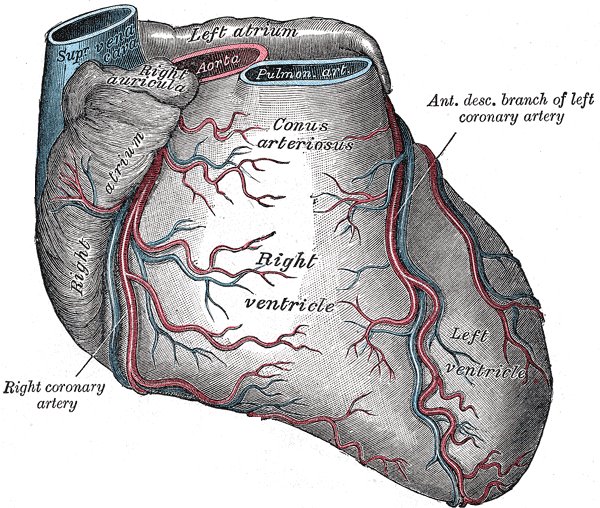
Image source: Gray's Anatomy, 1918, public domain.
Dangers of unrecognized heart disease: Husband dies while giving wife CPR (both found dead, age 60, 59) http://goo.gl/LZ39U
NYC blogger dies of heart attack http://goo.gl/GLHWC
Is blogging bad for your health? Conservative blogger Andrew Breitbart, 43, dies "unexpectedly from natural causes". Wikipedia, 2012.

Comments from Twitter

@doctorwes: Uh, oh> RT @DrVes: Bloggers and Heart Attacks http://goo.gl/WlVkR

@scanman: This obviously applies to prolific posters.

@gruntdoc: This is why I'm not prolific...

Digg.com and Other Web 2.0 Songs

After the general Web 2.0 song became a YouTube sensation, now we have songs about specific web services like Digg.com (see the second video below). What is next -- a song about Dissect Medicine or Grand Rounds?


Web 2.0: Here Comes Another Bubble


Digg Song

Kina Grannis created the “Digg Song” and became an almost instant viral success, so much so that a record company has been in touch with her. Link via Dr Shock MD PhD. Song chorus:

"Gotta digg, gotta digg, gotta digg
Gotta make this story big!"

I have not heard about the "Diagnosis Wenckebach" singers being offered a record deal yet. Strange...

Related:
Web 2.0 Music Video: Here Comes Another Bubble
Digging Grand Rounds
Digg for Medicine: Nature Publishing Group Launches Dissect Medicine
Gotta Digg this One for Kina Grannis (Updated with interview). Gizmodo.com.

Saturday, January 5, 2008

Embed Google Presentations in Your Website


The armamentarium of embeddable objects (photo slideshows, YouTube videos) just increased with another member -- Google Presentations. Users of SldieShare were able to embed presentations for years, so why is this news? Two reasons: the power of Google and the stickiness of Google account. In all likelihood, Google will be around in 5 (10?) years and your uploaded presentations will still be on their servers. On the other hand, nobody is really sure where SlideShare will be in 5 years. Google launched personalized accounts several years ago to improve user experience by saving settings but also to create "stickiness" -- higher likelihood that the visitors will stay around to use other Google services while already logged in. For example, Bloglines is every bit as good RSS reader as Google Reader but I use Google. Why? Because I am already logged in Gmail, Blogger, Docs, Bookmarks, and it just does not make sense to type/remember different passwords for Bloglines, SlideShare, BuzzWord, Del.icio.us, etc.

In any case, despite the initial lukewarm response by most bloggers, Google Presentations is a useful tool. Some nice features are:

- ability to share documents and collaborate
- online chat with multiple users during presentation
- embeddable presentations


I used Google Presentations when I hosted Medicine 2.0 -- the blog carnival about Web 2.0 and Medicine (see above). On a side note, it looks like we will have Web 3.0, 4.0, 5.0, etc. at some point in the future but this is a topic for another blog post.

Further reading:
Embed Google Presentations. Google Blogoscoped.
Embed PowerPoint Presentations Using Google Docs. Google Operating System.
Google Presentations Launches Today. CasesBlog, 9/18/2007.
Medicine 2.0, Blog Carnival About Web 2.0 and Medicine, Year 1, Issue 9. CasesBlog, 09/2007.
Web 3.0 and medicine -- Giustini 335 (7633): 1273 -- BMJ, 12/2007.

Updated: 04/08/2008

Tuesday, January 1, 2008

Grand Rounds from South Africa

Grand Rounds is the weekly summary of the best posts in the medical blogosphere. This week's edition comes from South Africa and is illustrated with some great photos of the wildlife there. See an example below and be sure to check the full post by visiting Other Things Amanzi.


Pre-Rounds is an article series about the hosts of Grand Rounds on Medscape.com. Nick Genes of Blogborygmi, who writes the Medscape column, is the founder of Grand Rounds and the archive host.

Image source: Other Things Amanzi.

Thursday, December 6, 2007

Clinical Correlations, NYU Internal Medicine Blog, Celebrates One-year Anniversary

Clinical Correlations, an NYU Department of Medicine educational web site, hosted by the Internal Medicine Residency Program, celebrates its one-year anniversary:

"It’s been quite a year in the life of Clinical Correlations. One year ago today we officially announced the creation of Clinical Correlations, the NYU internal medicine blog, to the NYU medical community. Starting from scratch without much of a game plan we developed a website (a word I greatly prefer to blog) that we hoped would simultaneously inspire students, house staff and faculty. I am so proud to say that I think we have accomplished this goal. In this year, I have learned that perseverance clearly pays off and now Clinical Correlations has become part of the very fabric of NYU."

"In the last year we have had 216 posts on various medical topics. Our writers have included medical students, residents, chief residents, former chief residents and faculty from NYU. Our editorship staff has expanded to 11 senior editors and 11 copy editors. Our overall readership has steadily slowly grown through the year without any a single advertisement or strategically placed comment on other blog sites or forums. We have readers in over 110 countries. Our hits are now averaging ~250/day."

I wrote a short piece on Residency Program Blogs in 2006:

The Early Days

I think the first residency program blog was Bedside.org launched by a faculty member at the University of Cincinnati in March 2003. It looks like Dr. Carl Gandola is still the sole contributor to the website.

For the Residents, By the Residents

My former residency program at Case Western Reserve University (St Vincent/St Luke) followed in 2004, and as far as I know, that was the first blog created for the residents by the residents (correct me if I am wrong). Actually, the web site was not a blog in the exact sense of the word but it just used the newly redesigned (at that time) Blogger.com to make a regular web site supported by the residents who contributed clinical cases, EKGs, CXRs and medical procedures info. This web site grew quite popular within the residency program and spun off several projects, including the blog you are currently reading...

References:
Celebrating our one year anniversary!! Clinical Correlations.
Residency Program Blogs. CasesBlog, 03/2006.
Image source: Clinical Correlations.

Tuesday, December 4, 2007

How to Create a Blog Carnival: A Step by Step Guide

Berci Mesko of ScienceRoll.com has a comprehensive how-to guide on creating your own blog carnival. A blog carnival is a blog event similar to a magazine dedicated to a particular topic. Each edition of a blog carnival is in the form of a blog article that contains links to other blog articles on the particular topic (source: Wikipedia).

The most famous medical blog carnival is the venerable Grand Rounds - a weekly summary of the best posts in the medical blogosphere. Pre-Rounds is an article series about the hosts of Grand Rounds on Medscape.com. Nick Genes of Blogborygmi, who writes the Medscape column, is the founder of Grand Rounds and he maintains the 4-year-old archive. I have hosted Grand Rounds twice which is nothing compared to 4-time hosts like GruntDoc and Kevin, M.D.

Berci knows a thing or two about launching blog carnivals for sure -- he started 2 of them:

Medicine 2.0
Gene Genie

He points to the following steps to help you create your own blog carnival:

Find out a proper name
Register it at BlogCarnival.com
Create a blog for your carnival
Write a mission statement and a guideline:
Create a logo
Recruit


This Google video shows it takes about 2 minutes to start a blog on Blogger.com. Creating a web site has never been easier.

References:
How to create a blog carnival: Step by Step. ScienceRoll.com.
Popular Case-Based Resource Models Online Medical Training. 2006;8(2), 2006 Medscape.
Clinical Cases Make Blog a Popular Resource. 2006;8(1), 2006 Medscape.
Image source: OpenClipArt.org, public domain.

Saturday, November 24, 2007

From zero to hero in one year: what it takes to rise to stardom in medical blogging world

Berci Mesko celebrates the one year anniversary of his medical blog ScienceRoll.com. He started with zero visitors one year ago to reach more than 1,000 page views per day.

He is generous enough to list me among his mentors but in reality I learned far more from him than the other way around. For example, I have never used my SecondLife account and Berci seems to be the medical blogger who knows most about it. I am happy to be one of his 266 FeedBurner subscribers. Currently, this blog still has about 1400 subscribers but with the speed Berci's website is ascending in the medical blogging world, it will surpass this number by its second anniversary.

Berci lists his achievements and some of them are also useful tips on how to start and maintain a popular blog:

I’ve launched two blog carnivals: Gene Genie is dedicated to human genetics and personalized medicine, while Medicine 2.0 is devoted to web 2.0 and medicine.
Tip: Start a blog carnival.

I got a special mention in Medgadget’s Weblog Awards in January.
Tip: Have your blog nominated for blog awards.

Some of my posts have been mentioned by Pharyngula, Blog Around the Clock, Medgadget, Neatorama, Mashable! and Read/Write web.
Tip: Comment on other blogs.

I enjoy the support of HONcode, Healthcare Blogger Code of Ethics and DNA Network.
Tip: Register your blog with different networks and directories.

I’ve hosted some editions of Gene Genie, Medicine 2.0, Mendel’s Garden and Grand Rounds.
Tip: Host blog carnivals.

I’ve had several behind-the-scenes interviews with famous medical bloggers and others as well.
Tip: Interview other bloggers on your website.

References:
The First Birthday of Scienceroll!
12 Important U.S. Laws Every Blogger Needs to Know. Aviva Directory, 02/2008.
A Wikipedia wizard and blogger. BMJ Career Focus, 08/2007.
Image source: BMJ Career Focus.

Updated: 02/23/2008

Friday, November 9, 2007

CIO of Harvard Medical School Explains Why He Writes a Blog

John Halamka, MD, MS, is the Chief Information Officer (CIO) and Dean for Technology at Harvard Medical School, and a practicing emergency physician:

"I've found that I can answer many questions in public forums by referring to postings I've made in my blog. I've posed several questions to the community via my blog and received many helpful responses. The big question will be - it is sustainable?

People who know me well know that I am not driven by fame or fortune, I just want to make a difference. My experience running a software company in my early 20's taught me that judging the value of life by a number in a bank balance, the type of car you drive, or the size of your house is not very satisfying.

I also crave learning. I welcome suggestions on how to become a better blogger."

Dr. Halamka sleeps only 4 hours per night and has been using 30 minutes from that time since he started blogging.

References:
Blogging about Blogging. Life as a Healthcare CIO.
Image source: Life as a Healthcare CIO.

Thursday, November 1, 2007

Medical Blogger Launches Radio Show

Doctor Anonymous is "just a guy working in the American health care system trying to find the lighter side of life." And he does find it in his weekly radio show on BlogTalkRadio.com: Doctor Anonymous Live. Click the play button to listen to the latest show:


Subscribe to the show via RSS:

http://blogtalkradio.com/doctoranonymous/feed