A presentation on the 2007 Guidelines for Management of Venous Thromboembolism (DVT and PE) by ACP is embedded below. It is based on an article published in the Annals of Int Med, 6 February 2007. The presentation is one of the Topics Discussed During the Medicine Consult Service Rotation at Cleveland Clinic in March/April 2008.
In the presentation, I used only free public domain images from OpenClipArt.org and Wikipedia.
Google Docs (Word Docs, Spreadsheets and Presentations) is gradually getting better although not yet without some annoying technical glitches. Google Docs will not require an Internet connection in near future and can be used completely offline via Google Gears. When you connect to the Internet, the offline document will be synchronized with the online version. See how it works in the video below.
Offline access to Google Docs
By the way, you can embed videos directly in your Google Docs (Word). How cool is that?
References:
Offline access to Google Docs. Google Blog.
Bringing the cloud with you. Google Docs Blog.
How to Embed YouTube Videos in Google Docs. Labnol.org.
Related:
Using Google Docs Offline. Google Blogoscoped, 04/2008.
Showing posts with label Residents. Show all posts
Showing posts with label Residents. Show all posts
Tuesday, April 1, 2008

Tuesday, March 25, 2008
Topics Discussed During the Medicine Consult Service Rotation at Cleveland Clinic in March/April 2008
 This is a list of the topics discussed during the Medicine Consult Service rotation with residents and medical students at Cleveland Clinic:
Which blood pressure medications to take on the morning of surgery?
Use of blogs in medicine
How to start a medical blog in 2 minutes
Use of RSS feeds in Medicine
Best Web Feeds Reader for Medical and General Information
What is the risk for developing ARF after surgery?
Something you have never seen before -- a rare central line complication in NEJM
Self-plagiarism of a Case Report in NEJM
What to do if you loose a guide wire during central line placement?
Guidelines for treatment of DVT/PE. See the presentation from Google Docs.
Preoperative Care of Patients with Kidney Disease, mnemonics PAST and HIP
New perioperative guidelines for noncardiac surgery (ACC, Medscape)
Podcasts in Medicine:
- Top 5 Medical Podcasts I Listen To
- Annals of Internal Medicine Launches Podcast and Audio Summaries
- Podcasts from Conferences of University of Tennessee IM Residency Program
Text-to-Speech Programs and Continuous Medical Education
Case 2: Does this patient need a beta-blocker? and 4CD mnemonic to remember the risk factors in RCRI
How to Score Well on the Boards?
Chest compressions-only CPR works as well as standard technique in adults
Hyponatremia and Hypernatremia:
Hyponatremia - Na 118 - What is the cause?
Syndrome of Inappropriate Antidiuretic Hormone Secretion (SIADH) due to SSRIs
SIADH due to Lung Cancer and Aspiration Pneumonia
Hypernatremia due to Dehydration in Dementia
Wellbeing practices correlated with the feeling of happiness: MOTORS
Keep residents happy -- it is better for patients
Inventor of Cardiac Bypass (CABG)
A doctor asks which portable computer/PDA/smartphone to choose
Electrocardiogram (ECG, EKG) Learning Tools
A Systematic Approach to Electrocardiogram (EKG) Interpretation by Using 2 Mnemonics: A RARE PQRST/DR III EEE by Dr. Dimov
Atrial fibrillation (AFib) with rapid ventricular response (RVR) due to triple lumen catheter (TLC) placement
Complications of Central Line Placement: Pneumothorax, Arrhythmia, Hematoma
Drum circles at a major Cleveland hospital relieve employee stress
Will "Dr. Nurses" Take Over Primary Care?
Case 3: When to correct hyperkalemia before surgery?
Case 4: When to do hemodialysis before surgery in patients with ESRD?
To be discussed in the future
Acid-base Balance Cases and Calculators by Dr. Dimov
5 Tips to Stay Up-to-Date with Medical Literature
Web 2.0 in Medicine (from Google Presentations) by Dr. Dimov
Aortic Stenosis and Preoperative Evaluation for Noncardiac Surgery
New guidelines for prevention of bacterial endocarditis
Topics from previous rotations
Different IV catheters and related complications
Atelectasis as source of fever by Dr. Dimov
Rates of medication errors among depressed and burnt out residents by Dr. Dimov
How do you define prolonged immobilization?
Hydralazine use in HTN by Dr. Dimov
How many "organ"-renal syndromes are recognized? by Dr. Dimov
GLP-1 receptor agonist (Byetta) and DPP-4 Inhibitors for Treatment of Diabetes by Dr. Batal/Dr. Dimov
Difficult to control asthma - what to do after ICS/LABA/LTRA have failed by Dr. Dimov
When to Use Xolair (Omalizumab) in Asthma? by Dr. Dimov
Mind maps for asthma treatment by Dr. Dimov
The list will be updated periodically as new topics are added by the end of the month. As you can see from the links above, a blog can be used as an educational portfolio for both personal learning and teaching.
Further reading:
Topics Discussed During the Internal Medicine Rotation at Cleveland Clinic in October/November 2007. CasesBlog, 10/2007.
Topics Discussed During the Internal Medicine Rotation at Cleveland Clinic in September 2007
Using a Blog to Build an Educational Portfolio. CasesBlog, 1/2007.
DB’s thoughts on being a clinical educator. DB’s Medical Rants, 11/2007.
Attending Rounds. DB’s Medical Rants, 02/2008.
Happiness. DB’s Medical Rants, 03/2008.
Updated: 04/04/2008
Saturday, March 8, 2008
Electrocardiogram (ECG, EKG) Learning Tools
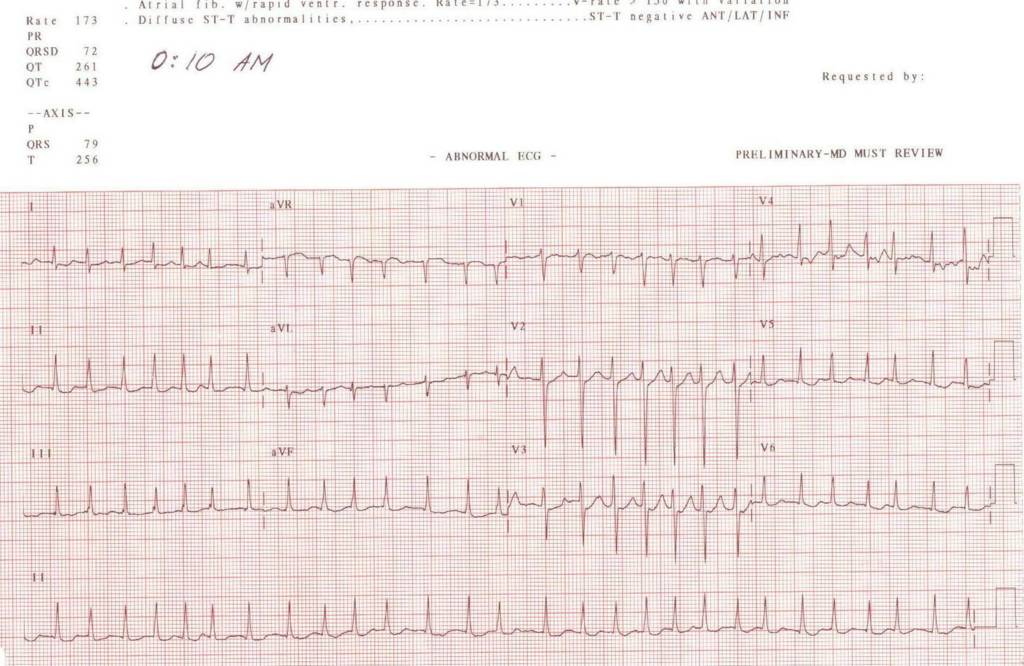 To provide some background, I am a teaching attending at Cleveland Clinic and have multiple rotations during the year with our residents and medical students. We record all topics discussed during a particular rotation on this blog and I know from the feedback which one the residents and students like the best. This month it was the session about using 2 mnemonics as a systematic approach to interpreting EKGs and web-based tools for EKG training. All senior medical residents at Cleveland Clinic have to take an EKG exam in their second year and they found the EKG learning tools listed below especially helpful:
- ECG Wave-Maven by Harvard Medical School is a fully-fledged ECG-trainer
- EKG World Encyclopedia by McGill University
- Arrhythmia simulator by SkillStat with a play, pause and quiz mode
-ECG Palm Brain is a useful online and PDA reference
- Systematic Approach to Reading Electrocardiograms by Using 2 Mnemonics
- EKGs with Dr. Koch: It's Not Only Educational It's Also Fun -- a Cleveland Clinic cardiologist will guide you through the interpretations of several EKGs
Audio
Audio lecture: Basics of EKG. Dr. Dwight Dishmon. Podcasting Project for the UT Internal Medicine Residency Program, 2006.
Video
ECG Video: For Med Students studying the basics of reading an electrocardiogram, from the University of Wisconsin.
References:
Topics Discussed During the Internal Medicine Rotation at Cleveland Clinic in February/March 2008
Image source: Atrial fibrillation (AFib) with rapid ventricular response (RVR) due to triple lumen catheter (TLC) placement
Updated: 03/04/2009
Thursday, March 6, 2008
Attending rounds: What is SAPHO syndrome?
SAPHO syndrome includes a variety of inflammatory bone disorders that may be associated with skin changes. SAPHO stands for Synovitis-Acne-Pustulosis-Hyperostosis Osteomyelitis.
An entity initially known as Chronic Recurrent Multifocal Osteomyelitis (CRMO) was first described in 1972. The term SAPHO was coined in 1987.
Treatment is with NSAIDs, steroids, methotrexate or Enbrel.
References:
Round 7: Synovitis-Acne-Pustulosis-Hyperostosis osteomyelitis syndrome (SAPHO). Johns Hopkins University School of Medicine.
SAPHO syndrome, from Wikipedia, the free encyclopedia.
An entity initially known as Chronic Recurrent Multifocal Osteomyelitis (CRMO) was first described in 1972. The term SAPHO was coined in 1987.
Treatment is with NSAIDs, steroids, methotrexate or Enbrel.
References:
Round 7: Synovitis-Acne-Pustulosis-Hyperostosis osteomyelitis syndrome (SAPHO). Johns Hopkins University School of Medicine.
SAPHO syndrome, from Wikipedia, the free encyclopedia.
Friday, February 22, 2008
Attending rounds: How many "organ"-renal syndromes are recognized?
 There are 3 "organ"-renal syndromes:
- Hepatorenal Syndrome (HRS) - development of renal failure in patients with advanced chronic liver disease, occasionally fulminant hepatitis, who have portal hypertension and ascites; 40% of patients with cirrhosis and ascites will develop HRS.
- Cardiorenal Syndrome - presentation of combined cardiac and renal dysfunction.
- Pulmonary-Renal Syndrome (PRS) - presentation of combined alveolar hemorrhage and glomerulonephritis.
Pulmonary-Renal Syndrome is the least well-recognized among the 3 syndromes. For example, it is not even listed under this name in the current edition of the "universal textbook of medicine" UpToDate (version 15.3). There is an old proverb: beware the man of a single book (homo unius libri).
Pulmonary-renal syndrome (PRS) is diffuse alveolar hemorrhage and glomerulonephritis occurring simultaneously. It sound like Goodpasture's syndrome which is logical since Goodpasture's is the prototype cause of PRS. Pulmonary-renal syndrome can can also be caused by SLE, Wegener's granulomatosis, microscopic polyangiitis, and other connective tissue diseases -- see the Merck Manual for a full list of causes of PRS.
References:
Acute decompensated heart failure: The cardiorenal syndrome. CCJM (PDF).
The Clinical Challenge of Cardiorenal Syndrome. Circulation, 2004.
Are You Dependent on UpToDate for Your Clinical Practice?
Cirrhosis - JAMA Patient Page, 2012.
Image source: Wikipedia, GNU Free Documentation License.

Thursday, February 21, 2008
Attending rounds: How to start insulin therapy in diabetes mellitus type 2?
 See Figure 3. Algorithm for the management of type 2 diabetes from AFP (http://www.aafp.org/afp/20040801/489.html).
For patients who have been inadequately controlled on oral antidiabetic medications , the initial dose is typically 10 units/day or 0.1 to 0.2 units/kg/day. Initially, basal therapies are usually administered as a single dose in the evening. Where necessary, NPH insulin also may be given in 2 doses: 1 dose in the morning and 1 dose in the evening. The dose can be titrated in 1-, 2-, or 3-unit increments until target FPG levels are achieved. When initiating insulin, it is best to start low and increase the dose gradually until the target is reached (http://www.ispub.com).
If intermediate insulin is chosen, the amount can be calculated by dividing a patient's body weight in kilograms by four and using that number to determine the starting dose (resulting in one fourth of the regular dose) or by figuring the dose according to a ratio of 0.5 U/kg and using 25% to 30% of that amount as the initial dose. Patients who have insulin resistance often need between 0.75 and 1 U/kg and tend to tolerate the larger increases (http://www.postgradmed.com/issues/2003/06_03/3cooppan.htm)
In subjects with type 2 diabetes who are poorly controlled on oral antidiabetic medications, initiating insulin therapy with twice-daily BIAsp 70/30 was more effective in achieving HbA1c targets than once-daily glargine (Lantus), especially in subjects with HbA1c >8.5% (http://care.diabetesjournals.org/cgi/content/abstract/28/2/260).
The INITIATE (INITiation of Insulin to reach A1c TargEt) study provides guidelines for twice-daily initiation of insulin (aspart premix 70/30). Begin with 6 units twice a day if the FPG is 180 mg/dL or greater, and 5 units twice a day if the FPG is less than 180 mg/dL (http://www.medscape.com/viewarticle/567952).
References listed in the text above.
Image source: Wikipedia, public domain.

Monday, February 18, 2008
Keep residents happy -- it is better for patients
 A study in BMJ showed that depressed pediatric residents made 6.2 times as many medication errors as residents who were not depressed. The setting was in 3 urban children’s hospitals in the United States, 20% of the participating residents met the criteria for depression and 74% met the criteria for burnout. Burnout did not correlate with an increased rate of medical errors.
According to Newsweek, every year, between 300 and 400 doctors take their own lives—roughly one a day. No other profession has a higher suicide rate.
I have always suspected that happier doctors make for happier patients and a few years ago came up with a mnemonic for a set of well-being practices correlated with the feeling of happiness -- MOTORS -- because the pursuit of happiness, in its altruistic sense, can be the motor of your life.
“MOTORS” stands for:
Meaning --> find a meaning in what you do for a living but don't forget to set limits around it
Outlook --> have a positive outlook on life, be philosophical but also focused on success
Time --> spend quality time with F&F (Family & Friends)
Out of yuppie values --> don't focus on chasing money or prestige
Religious / spiritual practices
Self care practices, like sports or meditation
References:
Rates of medication errors among depressed and burnt out residents: prospective cohort study. Amy M Fahrenkopf et al. BMJ, doi:10.1136/bmj.39469.763218.BE (published 7 February 2008)
Image source: OpenClipArt.org
Related:
Physicians wellbeing - WJM theme issue, volume 174(1); January 2001.
Six Tips for Happiness by a Harvard Teacher. Clinical Cases and Images - Blog.
Why are doctors so unhappy? Edwin Leap.
Happiness. DB’s Medical Rants, 03/2008.
Doctors Who Kill Themselves. Newsweek, 04/2008.
Updated: 04/21/2008
Monday, February 11, 2008
Topics Discussed During the Internal Medicine Rotation at Cleveland Clinic in February/March 2008
This is a list of the topics discussed (or to be discussed) during the internal medicine rotation with residents and medical students at Cleveland Clinic:Treatment of AIDS-related Neutropenia by Dr. Dimov
DKA management by Dr. Zysek. See a typical case
Atelectasis as source of fever by Dr. Dimov
Pre-renal ARF, HCTZ and FENa. See a case discussion by Dr. Dimov
Indications for DVT prophylaxis in inpatients by Dr. Dimov
Progressive multifocal leukoencephalopathy (PML) in HIV/AIDS - prognosis and treatment by Dr. Mekuria
Use of IV Flagyl in patients with C. diff. by Dr. Mekuria
Value of repeating stool test in resolving C. diff. infection by Dr. Mekuria
Workup of thyroid nodule by Dr. Chooljian
Rates of medication errors among depressed and burnt out residents by Dr. Dimov
How do you define prolonged immobilization?
How Do You Treat VIP Patients?
Diagnosis and treatment of PE by A. Brady
Hampton Hump in Pulmonary Embolism
Discussion of JNC 7, physician card (PDF) by Dr. Dimov
Treatment of hypertension in African Americans (UpToDate link) by Dr. Dimov
ABCD of Hypertension Treatment in Different Ethnic Groups by Dr. Dimov
Hydralazine use in HTN by Dr. Dimov
How to start insulin therapy in diabetes mellitus type 2? by Dr. Dimov
How many "organ"-renal syndromes are recognized? by Dr. Dimov
GLP-1 receptor agonist (Byetta) and DPP-4 Inhibitors for Treatment of Diabetes by Dr. Batal/Dr. Dimov
Nicotine patch use in patients with AFib with RVR by Dr. Chooljian
Perioperative evaluation: mnemonic PASS/HIP and 8 short cases. New perioperative guidelines for noncardiac surgery (ACC, Medscape) by Dr. Dimov
Upper extremity DVT -- causes and treatment by P. Blake
What percentage of patients with a PICC line develop upper extremity DVT? by P. Blake
Choice of antihypertensive medications in aortic stenosis by Dr. Zysak
A Systematic Approach to Electrocardiogram (EKG) Interpretation by Using 2 Mnemonics: A RARE PQRST/DR III EEE by Dr. Dimov
How to stay up-to-date with the medical literature: a suggested approach by Dr. Dimov
Acid-base Balance Cases and Calculators by Dr. Dimov
ATN pathology and diagnosis by A. Brady
AIN diagnosis and treatment by Dr. Batal
Difficult to control asthma - what to do after ICS/LABA/LTRA have failed by Dr. Dimov
When to Use Xolair (Omalizumab) in Asthma? by Dr. Dimov
Mind maps for asthma treatment by Dr. Dimov
Guidelines for treatment of DVT/PE by Dr. Dimov
Podcasts in medicine and residency noon conferences by Dr. Dimov
To be discussed in the future
New treatments for primary pulmonary hypertension by A. Brady
Which patient population would benefit from hydralazine? by Dr. Mekuria
What is SAPHO syndrome? by Dr. Mekuria
How to use acetazolamide to correct hypercapnia in OSA and COPD? by Dr. Dimov
CHADS2 Score Determines Who Needs Anticoagulation in Atrial Fibrillation by Dr. Dimov
Web 2.0 in Medicine (from Google Presentations) by Dr. Dimov
Treatment of hypernatemia by Dr. Dimov
Topics from previous rotations
Different IV catheters and related complications
RTA type 1, 2, 4 by Dr. Dimov
SIADH - causes and diagnostic criteria, click for cases 1, 2
Aortic Stenosis and Preoperative Evaluation for Noncardiac Surgery
New guidelines for prevention of bacterial endocarditis
Treatment of hyperkalemia and hypokalemia - what questions to ask nurses when called about high or low K+, when to to give IV K+ instead of PO K+, etc.
Contrast-induced nephropathy
Indications for LP in patients with dementia
Difference between temporary and permanent IVC filters. Source: UpToDate 15.3
Hyponatremia
The list will be updated periodically as new topics are added by the end of the month. As you can see from the links above, a blog can be used as an educational portfolio for both personal learning and teaching.
Click here to submit suggestions for future topics.
Further reading:
Topics Discussed During the Internal Medicine Rotation at Cleveland Clinic in October/November 2007. CasesBlog, 10/2007.
Topics Discussed During the Internal Medicine Rotation at Cleveland Clinic in September 2007
Using a Blog to Build an Educational Portfolio. CasesBlog, 1/2007.
DB’s thoughts on being a clinical educator. DB’s Medical Rants, 11/2007.
Attending Rounds. DB’s Medical Rants, 02/2008.
Happiness. DB’s Medical Rants, 03/2008.
Updated: 03/06/2008
Wednesday, October 24, 2007
Topics Discussed During the Internal Medicine Rotation at Cleveland Clinic in October/November 2007
 October is one of my inpatient teaching months and we decided to assemble a list of topics for feedback and later reference. This is a list of the topics discussed during the internal medicine rotation with residents and medical students at Cleveland Clinic:
SIADH - causes and diagnostic criteria, click for cases 1, 2 by Dr. Bauml
Aortic Stenosis and Preoperative Evaluation for Noncardiac Surgery by Dr. Lin
New guidelines for prevention of bacterial endocarditis by Dr. Kuntjoro
Guidelines for treatment of DVT/PE by Dr. Dimov
Treatment of hyperkalemia and hypokalemia - what questions to ask nurses when called about high or low K+, when to to give IV K+ instead of PO K+, etc. by Dr. Lin and Dr. Gundroo
Different IV catheters and related complications by Dr. Kuntjoro and Dr. Dimov
Primary amyloidosis: diagnosis and treatment by Dr. Kuntjoro
POISE trial and perioperative guidelines for beta blocker use by Dr. Dimov
Statins After Bypass Lower Stroke Risk by Dr. Zimbwa
Contrast-induced nephropathy by Dr. Salem
Indications for LP in patients with dementia by Dr. Tenforde
Difference between temporary and permanent IVC filters by Dr. Robertson. Source: UpToDate 15.3
New definition of AMI. Source: Dr. Wes and Circulation
Rashes due to drug allergy by Dr. Lin
Podcasts in medicine by Dr. Dimov
To be covered in the future:
5 Tips to Stay Up-to-Date with Medical Literature
RTA type 1, 2, 4 by Dr. Dimov
Perioperative evaluation for noncardiac surgery by Dr. Dimov
Hyponatremia
Treatment of hyponatremia with ADH receptor antagonists by Dr. Dimov
Web 2.0 in Medicine (Google Presentation) by Dr. Dimov
The list will be updated periodically as new topics are added by the end of the month. As you can see from the links above, a blog can be used as an educational portfolio for both personal learning and teaching.
Further reading:
Topics Discussed During the Internal Medicine Rotation at Cleveland Clinic in September 2007
Using a Blog to Build an Educational Portfolio. CasesBlog, 1/2007.
Becoming a Clinical Assistant Professor of Medicine and Web 2.0 Projects. CasesBlog, 10/2006.
DB’s thoughts on being a clinical educator. DB’s Medical Rants, 11/2007.
Attending Rounds. DB’s Medical Rants, 02/2008.
Updated: 02/03/2008
Sunday, October 7, 2007
It's Interview Time Again for Future Residents -- See Helpful Tips
 During this time of the year U.S. medical students and international medical graduates (IMGs) are preparing their ERAS applications and waiting for interview offers from residency programs. A selection of helpful (and funny) blog posts is collected below:
It's Interview Time for IM Residency -- Avoid Top 10 Mistakes
Residency Interview Advice from Big Mama Doc
A Guide for Doctors Planning to Relocate Abroad
UK Medical School Interview Technique on YouTube
Related reading:
How to perform on the residency interview. Conrad Fischer's Blog.
Image source: Image source: OpenClipArt.org, public domain.
Wednesday, September 12, 2007
Topics Discussed During the Internal Medicine Rotation at Cleveland Clinic in September 2007
September is one of my inpatient teaching months and we decided to assemble a list of topics for feedback and later reference. This is a list of the topics discussed during the internal medicine rotation with residents and medical students at Cleveland Clinic:Guidelines for treatment of DVT/PE
Central retinal artery occlusion
Treatment of hyponatremia with ADH receptor antagonists
Treatment of DKA and hyperosmolar state
Sick euthyroid syndrome
Treatment of uric acid nephrolithiasis
Treatment of VIP patients
Idiopathic CK elevation
Different IV catheters and related complications
"Salami" paper and scientific conduct
Non-anion gap acidosis
RTA type 1, 2, 4
DKA labs with effect of treatment walk-through
Pleural effusion - transudate vs. exudate
Digoxin toxicity case 1, case 2, case 3
Treatment of Hyperkalemia
Guidelines for transfusion in sickle cell disease, Hgb goal?
Iron overload due to blood transfusions in sickle cell disease
Web 2.0 in Medicine (Google Presentation)
Blogs for medical students, CCLCM blog
Future topics:
Diagnosis and treatment of acute chest syndrome
Treatment of Hypokalemia
Hypernatremia
Guidelines for treatment of elevated INR due to Coumadin
DM gastroparesis and botulinum injections
SIADH
The list will be updated periodically as new topics are added by the end of the month. As you can see from the links above, a blog can be used as an educational portfolio for both personal learning and teaching.
Further reading:
Using a Blog to Build an Educational Portfolio. CasesBlog, 1/2007.
Becoming a Clinical Assistant Professor of Medicine and Web 2.0 Projects. CasesBlog, 10/2006.
Updated: 09/19/2007
Sunday, April 15, 2007
Financial Advice for Residents and Fellows
 The journal Resident & Staff Physician has a 3 part series called Financial Consult for the Severely Anemic Resident Wallet:
1. Invest in Yourself
2. Choosing the Right Investment Fund
3. Reduce Your Tax Burden
The authors are Wender Hwang, MD, a Chief Resident in EM at Loma Linda University and Erik W. Thurnher, MD, CFP, ER Physician at Kaiser Permanente Medical Group.
Further reading:
What is the right specialty/fellowship for you? Take a test to see
Buy or to rent? The New York Times shows the answer. Blogging Stocks
Wednesday, April 11, 2007
What is like to be a FP, IM, EM, ObGyn (put your desired specialty here) doctor?
The Student Doctor Network forum has recently stared a series of ‘20-question’ interviews with physicians in each of the major medical specialties. There are good questions like "Describe a typical day at work", "Now that you’re in your specialty, do you find that it met your expectations?", "Are you satisfied with your income?", "What do you like most and least about your specialty?", "Where do you see your specialty in 10 years?"Emergency Medicine
20 Questions: Dale Woolridge, MD/PhD [EM]
OB-Gyn
20 Questions: Andrew Beckwith, MD [OB/Gyn]
Family Medicine
20 Questions: Charles Vega, MD [Family Medicine]
Allergy/Immunology
What's It like to Be An Allergist? from the appropriately-named Achoo! Blog. This is not from the SDN series but it is on the same topic.
Further reading:
What is the right specialty/fellowship for you? Take a test to see
Hunting Season. Dr. Wes, 08/2007.
Image source: OpenClipArt.org, public domain.
Tuesday, November 7, 2006
It's Interview Time for IM Residency -- Avoid Top 10 Mistakes
 November, December and January are the busiest months of the year for the U.S. medical students and international medical graduates looking to secure a position in internal medicine residency.
LifeHack.org and QuintCareers list top 10 interview blunders - try to avoid them:
- Poor handshake
- Talking too much
- Talking negatively about current or past employers/managers
- Showing up late or too early
- Treating the receptionist rudely
- Asking about benefits, vacation time or salary
- Not preparing for the interview
- Verbal ticks
- Not enough/too much eye contact
- Failure to match communication styles
Most importantly -- don't try to be somebody else, just be yourself.
References:
10 Interview Bloopers. LifeHack.org.
Avoid These 10 Interview Bloopers. Deborah Walker.
Residency Interview Advice from Fat Doctor
Unsolicited Advice to Residency Applicants. Intueri, 2007.
Image source: Wikipedia, GNU Free Documentation License.

Related reading:
How the Match Works(’Cause everyone’s been asking, “So did you get a job?”). Over My Med Body, 02/2008.
Top 10 interview mistakes. CNN, 05/20008.
How to perform on the residency interview. Conrad Fischer's Blog.
Subscribe to:
Posts (Atom)